Infinite Craft by Neal
neal.funWord
4.81.18K Reviews
- Version
- 21
- Installs
- 5.00M
- Age Rating
- Mature 17+
Screenshots
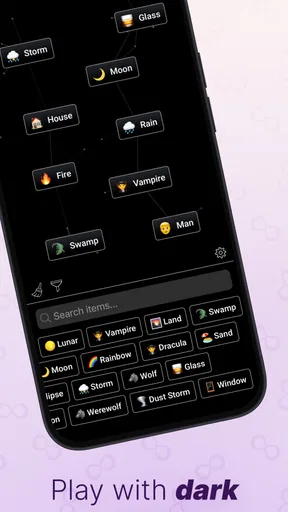
Our Review of Infinite Craft by Neal
 Analysis by Appyee
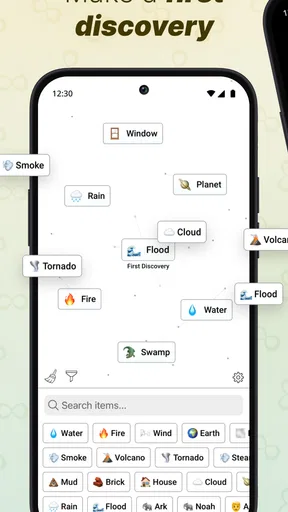
I expected Infinite Craft to be a quick word game I would open for a few minutes and then forget. Instead, its simple idea kept pulling me back: combine familiar words, watch them produce something new, and then use that result as another ingredient. The first discovery feels playful, but the real appeal is the growing chain of associations in your own head.
Created by neal.fun, this free word game is aimed at mature players and runs on Android versions starting with 6.0. It has reached over five million installs, with a 4.8 average from around fifty-eight thousand ratings. Those numbers suggest a broad audience, but they do not tell you whether it deserves a permanent place on your phone. After spending time with it, my answer is more nuanced: it is excellent for curiosity-driven sessions, yet its long-term value depends heavily on whether you enjoy open-ended experimentation rather than clear goals.
Why the first week feels so rewarding
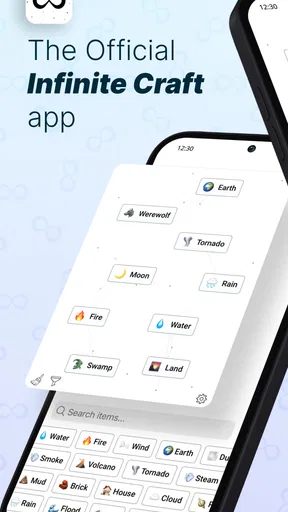
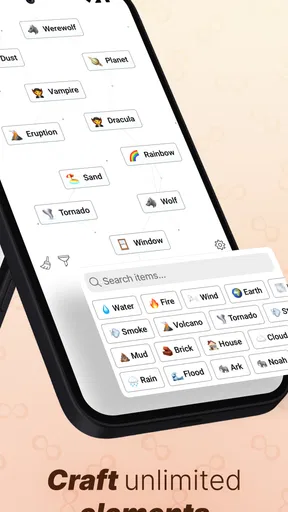
The opening experience is unusually easy to understand. You begin with basic concepts and combine them to create other concepts. There is no complicated control scheme to learn, no character build to manage, and no long tutorial standing between you and the central idea. I could pick it up while waiting for an appointment, make a few combinations, and stop without feeling that I had abandoned a mission.
What makes the early sessions work is the balance between recognition and surprise. Some combinations feel logical enough that I could guess them, while others send the chain in an unexpected direction. That uncertainty gives every new word a small reveal. The pleasure is not only in finding a result; it is in seeing how ordinary ideas can be connected through a sequence that I would not have planned.
The game is best understood as a sandbox rather than a traditional puzzle book. A crossword asks me to solve a defined clue, and a daily word game usually gives me a fixed target. Here, I decide what to chase. I can explore a theme, test a silly idea, or simply combine whatever is already visible. That freedom is the main reason it feels less stressful than many alternatives in the word game category.
During a typical first-week session, I might start with a basic combination, notice an interesting result, and then spend several minutes building around it. That creates a useful “one more discovery” effect. There is no need to reserve a large block of time, and I never feel punished for leaving. For people who like collecting ideas, testing associations, or playing with language without a timer, this is a particularly comfortable design.
One practical tip improved my sessions: I stopped trying to combine everything immediately. Instead, I kept a mental theme for a few minutes, such as places, objects, or abstract ideas. This made the board feel less random and helped me notice relationships I would have missed while tapping without a plan. It also gave each short visit a small personal objective without forcing the game to provide one.
Learning the game’s rhythm
The most satisfying rhythm is alternating between deliberate guesses and reckless experiments. If I only use obvious combinations, progress becomes predictable. If I combine items without thinking, the results can feel disconnected. Mixing both approaches keeps the discovery process active. I usually make a few sensible attempts, then deliberately try an unlikely pairing to break out of a narrow line of thought.
Another useful habit is to treat every new result as a clue rather than merely a prize. A word that seems unimportant may become the bridge to a more interesting chain later. This changes how I play: instead of judging a result immediately, I remember its general meaning and return to it when another idea suggests a connection.
That is also where the game differs from a conventional vocabulary quiz. It is not primarily testing whether I know difficult definitions. It rewards flexibility, patience, and a willingness to try combinations that may sound strange. Someone who enjoys language but dislikes being marked wrong will probably appreciate that tone. Someone looking for a precise, competitive score may find it too loose.
The mature age rating is worth noticing before installing it for a younger player. The game may look harmless because it uses words and combinations, but the listed rating is Mature 17+, so I would not treat its simple presentation as a reason to ignore that classification. Parents should make their own decision based on the rating and the player’s age.
What keeps the novelty alive beyond the opening sessions
The first week is driven by discovery, but the game’s stronger quality is that it lets curiosity choose the direction. I was not forced to follow a fixed sequence, so returning did not feel exactly like replaying the same level. A new idea could send me toward a completely different set of combinations, and even a failed attempt could suggest a better question to try next.
It also works well as a low-pressure companion to everyday downtime. I can play while having coffee, during a short commute when it is safe and appropriate to use a phone, or while waiting for someone. Because there is no need to remember a complex control system, returning after a day away is painless. The game asks me to remember ideas, not button layouts.
For creative people, there is a less obvious use: it can act as a warm-up before writing or brainstorming. I sometimes use a few combinations to loosen rigid thinking before starting a difficult task. It does not replace a proper notes app or a structured brainstorming tool, but it encourages unusual associations in a way that feels lighter than staring at a blank page.
Month-to-month value, friction, and the point where curiosity fades
Whether this remains installed after the novelty fades depends on the player’s relationship with open-ended games. I can imagine returning to it regularly when I want a calm mental diversion, but I would not expect everyone to build a daily habit. There is no fixed schedule mentioned in the game’s basic identity, and its appeal comes from self-directed discovery rather than a recurring obligation.
That is a strength for some people and a weakness for others. Daily word games create a dependable ritual because they offer a fresh, limited challenge. Crossword apps provide a clearer sense of completion. Infinite Craft gives more room, but that room can eventually feel empty if I need a visible finish line. When I want a measurable achievement, I am more likely to choose a conventional puzzle.
The month-to-month value is highest when I use it in different ways. One visit can be casual experimentation; another can focus on a subject I find interesting; a third can be a creative warm-up. If I repeat the same unfocused tapping routine every time, the results become less memorable. The game does not automatically create a new personal goal for me, so I have to supply some of that structure.
I would recommend setting a natural stopping point. For example, I might explore until I find a handful of results that feel surprising, then close the app instead of continuing until every combination starts to blur together. This protects the sense of discovery. Treating it as an endless session is one of the fastest ways to turn its freedom into fatigue.
How much maintenance does it demand?
From a player’s point of view, the maintenance burden is light. The current version is 21, and the game supports Android 6.0 or newer, so it is accessible on a wide range of devices. The basic interaction is also easy to resume after a break. I do not need to maintain a character, manage resources, or remember a complicated set of rules between visits.
The real maintenance is mental rather than technical: remembering promising discoveries and deciding what to explore next. If I play in a scattered way, I can lose track of the combinations that seemed important. That is not a serious flaw, but it affects long-term satisfaction. A small personal note outside the game can help if I enjoy building themed chains, although people who want everything organized automatically may find this approach inconvenient.
The free price makes experimentation easy. I can install it without committing money, which is appropriate for a game whose appeal may be intensely personal. There are in-app purchases priced at $2.99 per item, so I would still check the purchase flow before handing the phone to someone else. For my own use, the free entry point is enough to decide whether the central loop suits me.
The game’s simplicity also means there is less to maintain emotionally. I do not feel behind if I skip a week. There is no pressure to preserve a streak or catch up with other players. That makes it a good fit for people who want a game that waits quietly until they are curious again.
Where fatigue begins
The biggest source of fatigue is the absence of a clearly defined endpoint. At first, endless possibility feels generous. Later, it can make progress difficult to judge. I may discover several new words and still wonder what I am supposed to pursue next. Players who prefer a sequence of levels, a campaign, or a strong sense of mastery should know that this is not where the game’s energy comes from.
Another limitation is that not every combination feels equally meaningful. Some results can be delightful because they connect ideas in a way I understand immediately. Others may leave me wondering why that particular outcome appeared. When the logic feels opaque, experimentation becomes less like solving and more like searching. That can be entertaining in short bursts, but it is less satisfying for anyone who wants every answer to be explainable.
There is also a risk of turning the game into a checklist. Once I start thinking only about how many discoveries remain, the imaginative part weakens. I begin looking for the next result instead of enjoying the connection that produced it. My best sessions happen when I accept that some combinations are interesting simply because they changed how I was thinking.
It is not the right choice for a player who wants fast competition, detailed statistics, or a social contest. It is also a poor substitute for a serious vocabulary-learning tool. Although words are central, the experience is about combining concepts and following curiosity, not completing lessons or systematically expanding language skills.
Who should keep it installed?
I think it earns lasting space on a phone for people who enjoy wordplay, lateral thinking, and quiet experimentation. It is especially suitable for short breaks because stopping does not feel like failure. It can also help writers, designers, students, and anyone else who enjoys shaking loose an idea before starting more focused work.
I would be more cautious recommending it to someone who needs a reliable daily routine. A structured crossword or daily guessing game may provide better recurring value because it supplies a clear challenge without asking the player to invent one. Likewise, people who become frustrated by ambiguous results may prefer a puzzle with fixed rules and a single correct path.
For families, the Mature 17+ rating deserves priority over the cheerful-looking word-game format. For adults, the rating is simply part of deciding whether the presentation and content fit their expectations. The game is free to try, but the optional purchases mean I would still approach it with the same basic care I use for any mobile game.
My long-term verdict
After the initial surprise fades, Infinite Craft remains valuable when I approach it as a creative sandbox rather than a conventional puzzle. Its strongest feature is not endless quantity by itself; it is the way a simple combination can redirect my attention and create a new line of thought. That makes it unusually good for relaxed, self-directed play.
Its weakness is the same freedom. Without a personal theme, a stopping rule, or a reason to return, the experience can become repetitive and directionless. I would not promise that it will become a permanent daily habit for every player. I would recommend keeping it installed if you enjoy occasional bursts of curiosity and are comfortable deciding when a session has reached its natural end.
Neal.fun has made a game that is easy to start, inexpensive to explore, and distinctive enough to stand apart from ordinary word puzzles. I would choose it over a crossword when I want surprise rather than a test, and over a competitive word game when I want to play without pressure. My honest recommendation is to treat it as a creative pocket toy, not an obligation: use it when you want to make connections, stop before the search becomes a chore, and return only when you have a fresh idea to test.
Verdict
Strengths of Infinite Craft by Neal
- Simple interface makes experimenting with combinations easy.
- New discoveries can feel rewarding and encourage creative play.
- Works well for short sessions without requiring a fixed goal.
- Large combination system offers plenty of room for experimentation.
- Suitable for players who enjoy wordplay and open-ended puzzles.
Limitations of Infinite Craft by Neal
- Some combinations depend on unexpected logic and may feel inconsistent.
- Progress can become repetitive after many similar discoveries.
- The interface may feel sparse for players expecting detailed visuals.
- Finding specific elements can be difficult without external hints.
- Requires an internet connection in some versions or situations.
Similar Picks in This Category
View All
Word Search - Word Puzzle Game
Bluetile4.8

Word Search Quest - Puzzles
Blackout Lab4.8

CodyCross: Crossword Puzzles
Fanatee, Inc.4.7

Words of Wonders: Crossword
Fugo Games4.9

Wordscapes: Word puzzle game
PeopleFun4.7

Word Search Explorer
PlaySimple Games4.9
Frequently Asked Questions
What is Infinite Craft by Neal?
Infinite Craft is a browser-based crafting and discovery game by Neal Agarwal. You begin with a few basic elements, such as Earth, Water, Fire, and Wind, then combine them to create new items, concepts, characters, places, and surprising combinations. The main appeal is experimentation: there is no fixed campaign to complete, so players can freely test recipes and build an increasingly large collection of discoveries.
How do you play Infinite Craft?
The gameplay is simple to understand but can become remarkably deep. Select two available elements and combine them by dragging one onto the other. If the combination works, a new element appears and is added to your collection; if it does not, nothing useful may happen. You can continue combining newly created elements, search your discoveries, and revisit previous results whenever you want.
Is Infinite Craft free to play, and does it require an account?
Infinite Craft is generally available to play for free through a web browser, and the basic experience does not normally require a paid subscription or a traditional account. Availability and features can depend on the version or platform you access. Because it is an online experience, users should check the official site for the current access method and any changes to its policies.
Can Infinite Craft be played on Android or iPhone?
Infinite Craft is primarily designed as a web experience rather than a conventional downloadable mobile game. On Android and iPhone, you can usually open it through a supported mobile browser and play using touch controls. Performance may vary according to the browser, device, and internet connection. Be cautious with unofficial apps or downloads that claim to be the official mobile version.
Does Infinite Craft have an ending or a specific goal?
Infinite Craft does not follow a traditional story campaign with a final level, fixed mission list, or single victory condition. Its goal is to discover as many combinations as possible and enjoy the unexpected results produced by the crafting system. Some players focus on finding rare concepts, while others simply experiment casually. Progress is open-ended, making it suitable for short sessions or extended exploration.
Play our best games!


